


What NICE guidance means for antimicrobial wound dressings
 ;
;
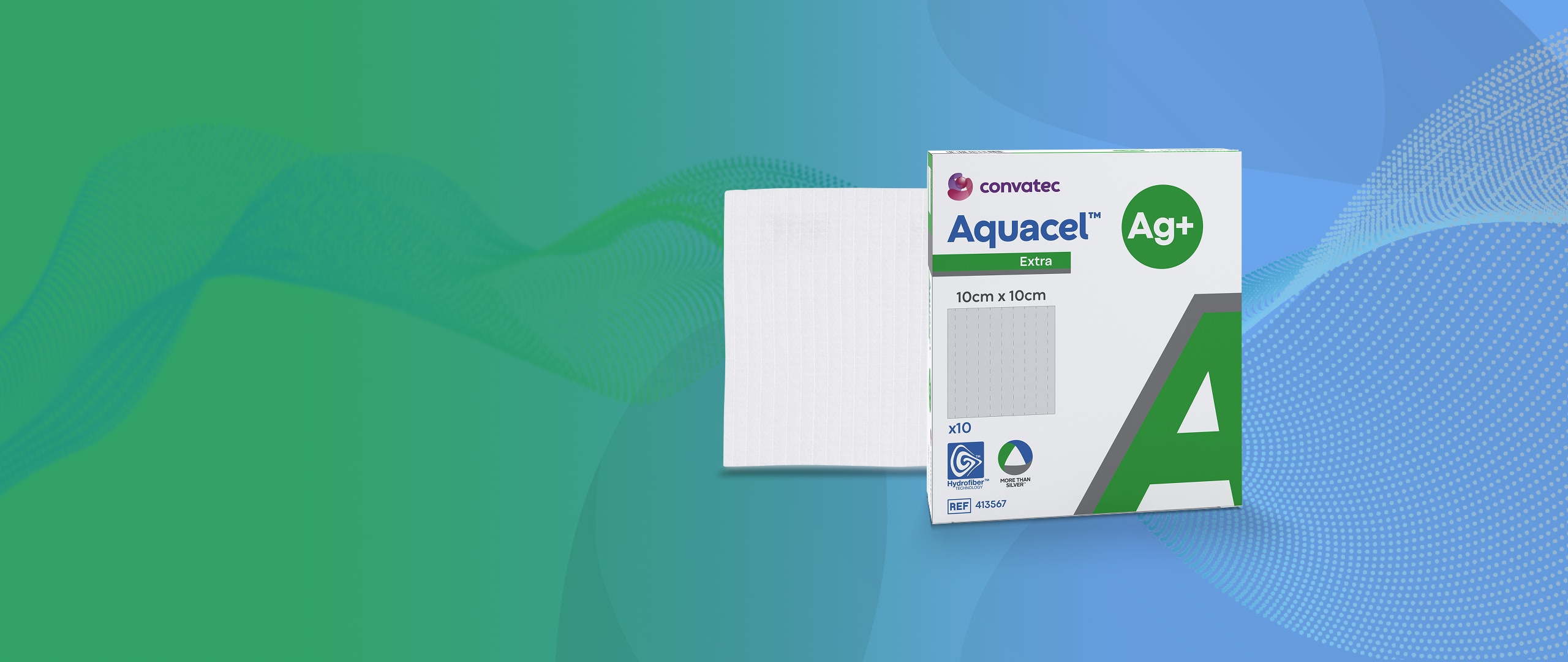
We’re excited to share that the latest evaluation from the National Institute for Health and Care Excellence (NICE) provides important clarity on the use of topical antimicrobial dressings such as Aquacel® Ag+ Extra™ for infected leg ulcers.
The guidance forms part of NICE’s Late-Stage Assessment (LSA) framework, which evaluates categories of technologies already in widespread NHS use within the UK and Ireland.
Key findings:¹⁻²
- Silver agents assumed to be used up to 12 weeks
- Evidence favours silver agents for achieving complete wound healing
- The faster patients progress to healing, the more likely that outcome will be cost-effective
What does the NICE LSA say?
The LSA looked at a range of clinical evidence, including randomised controlled trials (RCTs), real-world case studies, and expert opinion. Aquacel® Ag+ Extra™, with its three-component formula, was identified as a dressing that may offer better patient outcomes and faster healing times in the presence of infection risk.
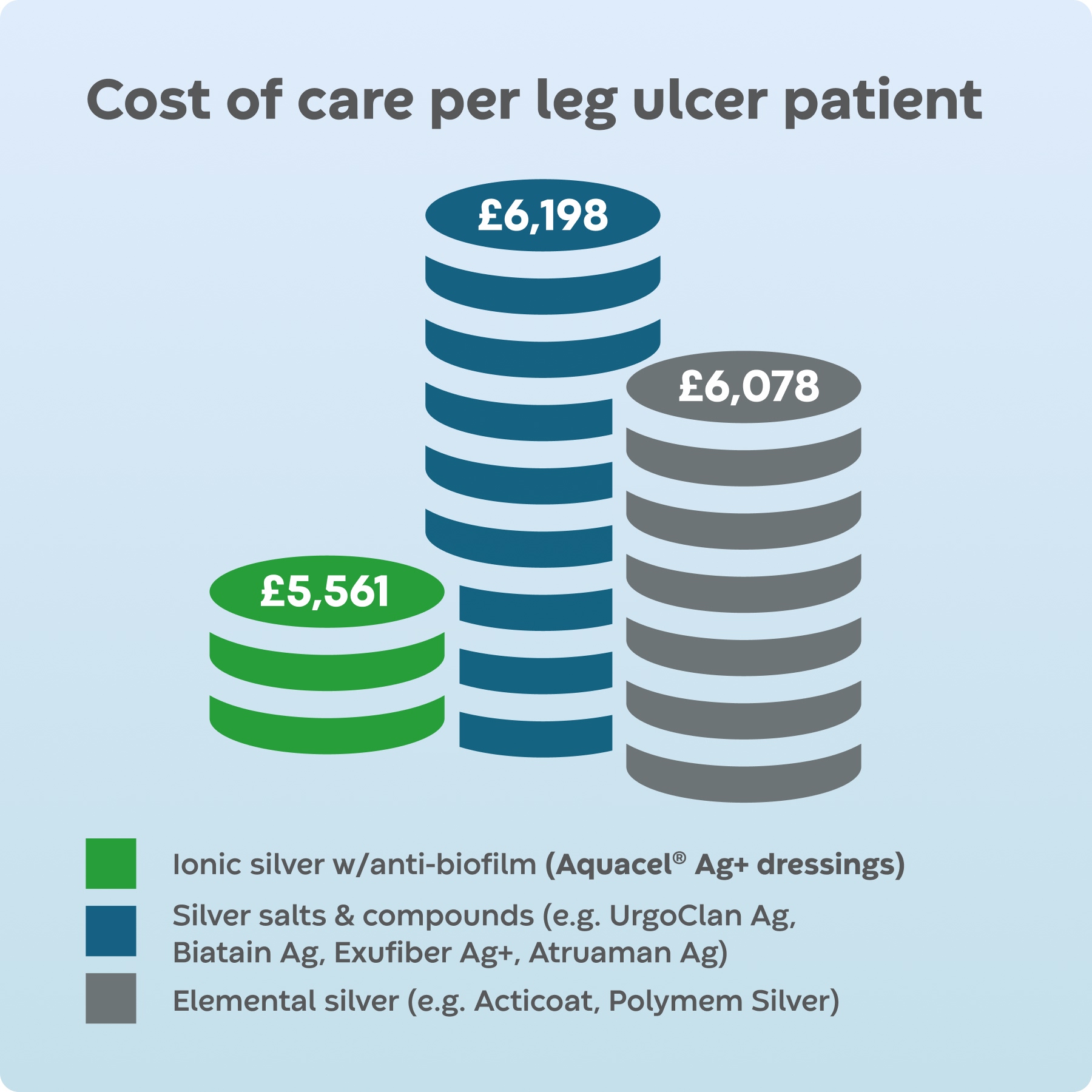
NICE's LSA highlights Aquacel® Ag+ Extra™ as a clinically effective and potentially cost-saving solution for wounds where infection or biofilm is suspected. Its evaluation recognised that certain silver dressings, particularly those designed with biofilm-disrupting technologies, such as More Than Silver™ technology can play a vital role in hard-to-heal wound care.
Why this matters for HCPs
With increasing focus on antimicrobial stewardship, many clinicians have been cautious about silver dressings, including the long-standing myth that silver-containing dressings can only be used for 2 weeks.
NICE’s latest review provides reassurance that, when used appropriately, dressings like Aquacel® Ag+ Extra™ offer measurable benefits and are assumed for use for 12 weeks, reviewing every 2 weeks and to keep using if needed.³

The biofilm battle
Biofilms are mixed communities of bacteria and other microorganisms living together⁴ and when free floating bacteria attach to a surface, this is when they can begin forming a biofilm. Biofilm is a major barrier to wound healing, thought to be present in almost 8 out of 10 hard-to-heal wounds⁵ – therefore it should be assumed present in every hard-to-heal wound.⁶
Biofilm is not always visible to the naked eye⁷ and can be difficult to remove, even after aggressive debridement, even reforming within 24 hours.⁸
When to use Aquacel® Ag+ Extra™
The 3 components of Aquacel® Ag+ Extra™ with its More Than Silver™ technology, ensure that it’s specifically designed to address the issue of biofilm and contribute to wound healing.
- Chelating agent to disrupt, breaking down biofilm matrix⁹⁻¹¹
- Surfactant to weaken, loosen and remove biofilm allowing absorption by the dressing¹⁰⁻¹³
- 1.2% ionic silver, a broad spectrum antimicrobial
Aquacel® Ag+ Extra™ in action
Baseline: 14-year old static wound
- Venous insufficiency
- Maanged with cleansing, debriding and antimicrobial dressings
- Compression and superabsorbent cover dressing for exudate
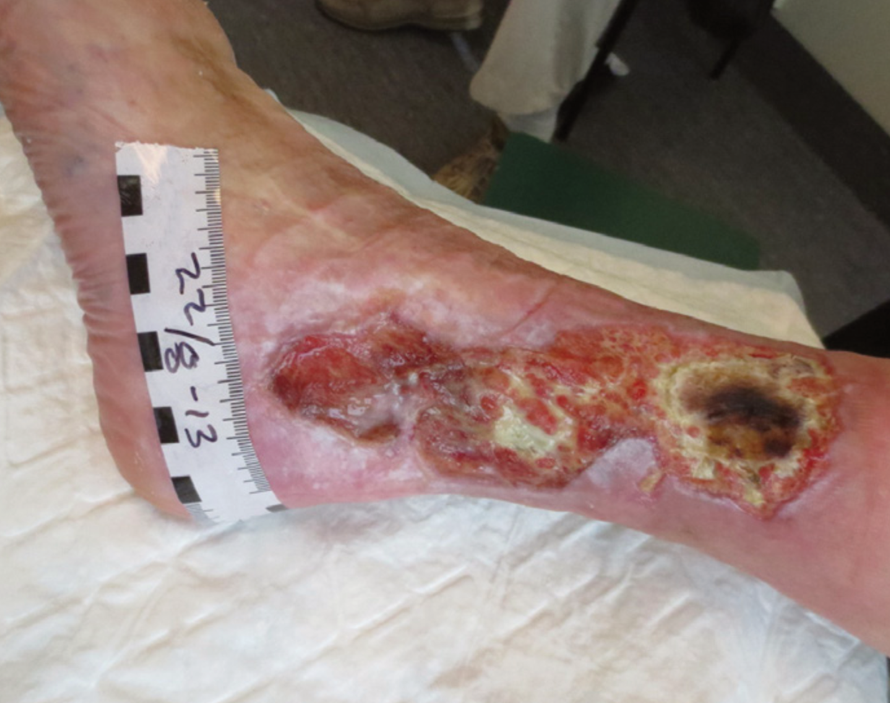
Intervention: 6 weeks with Aquacel® Ag+ Extra™
- Exudate managed with Hydrofiber®, reduced peri-wound maceration
- Healthy granulation formed, epithelialisation started
- Static wound progressing to healing

When to choose Aquacel® Ag+ Extra™
Managing wounds appropriately with Aquacel® Ag+ Extra™ gives your patients the chance to heal wounds
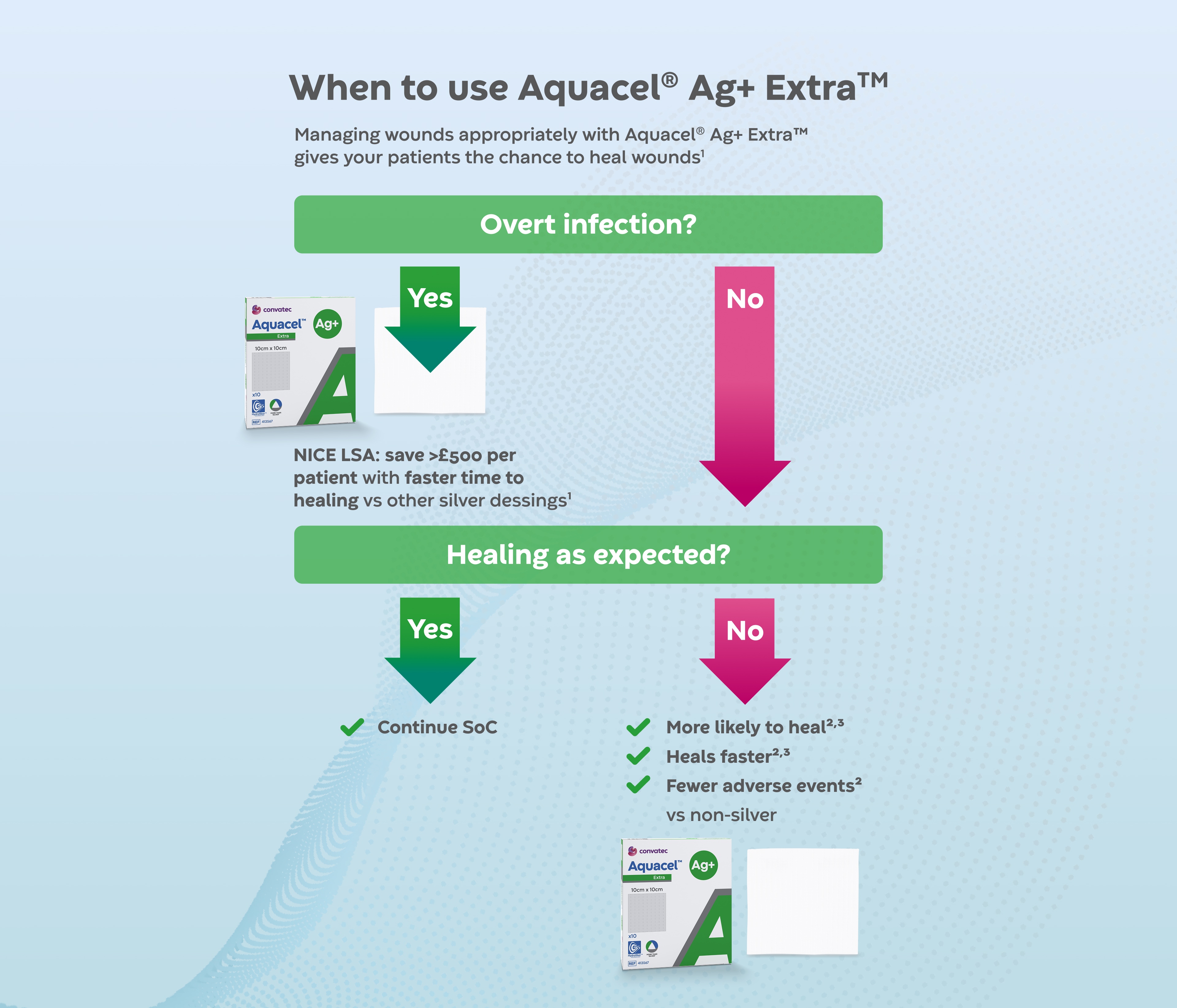
Key Takeaways
Silver dressings are not all created equally. NICE's LSA affirms that targeted use of advanced antimicrobial dressings like Aquacel® Ag+ Extra™ is supported by robust evidence and can be a significant dressing in infection and biofilm management.
References
1. Holmes et al [GID-HTE10041] – Topical Antimicrobial Dressings for Infected Leg Ulcers in People 16 and over. Second Addendum; NICE, York Health Economic Consortium. 2025.
2. Holmes et al [GID-HTE10041] – Topical Antimicrobial Dressings for Infected Leg Ulcers in People 16 and over. External Assessment Group Report; NICE, York Health Economic Consortium. 2025.
3. International Wound Infection Institute (IWII) Wound Infection in Clinical Practice. Wounds International. 2022.
4. Stewart. Microbiol Spectr. 2015;3(3).
5. Malone et al, J Wound Care. 2017;26(1):20-25.
6. Murphy et al, J Wound Care. 2020;29(Suppl 3b):S1-28.
7. International Wound Infection Institute (IWII) Wound Infection in Clinical Practice. Wounds International, 2022.
8. Wolcott et al. J Wound Care. 2010;19(8):320-328.
9. Banin 2006, Chelator Induced Dispersal and Killing of Pseudomonas aeruginosa Cells in Biofilm
10. Parsons 2016, Enhanced Performance and Mode of Action of a Novel Antibiofilm Hydrofiber® Wound dressing
11. Said 2014. An in vitro test of the efficacy of an anti-biofilm wound dressing
12. Chen 2000, Biofilm removal caused by chemical treatments
13. Meredith 2023, Assessment of Silver-Containing Gelling Fiber Dressings Against Antibiotic-Resistant Pathogens Using an in vitro Biofilm Model
14. Beraldo S, Ljungqvist J, Rodger R, Hanson B, Saavedra C. Effectiveness of an enhanced silver-containing dressing in hard-to-heal venous leg ulcers: a randomised controlled trial. J Wound Care. 2025;34(3):170-178.
15. Meaume S, Truchetet F, Cambazard F, et al. A radomized controlled, double-blind prospective trial with a Lipido-Colloid Technology-Nano-OligoSaccharide Factor wound dressing in the local management of venous leg ulcers. Wound Repair and Regeneration. 2012;20(4):500-511. doi:10.1111/j.1524-475X.2012.00797.x
AP-76380-GBR-ENG-v1
Blogs
05/09/2024

Wound healing in hard-to-heal cases
Despite advances in dressing technology and best practice, wound care is in crisis. Successful treatment requires an ...
Read more Read more28/08/2024
How to recognise wound biofilm
Spotting biofilm with the naked eye can be a challenge due to its microscopic structure. Knowing how to recognise wou...
Read more Read more27/08/2024
Why is biofilm so resistant?
Read our latest blog to learn what makes biofilm a tricky customer and how the right wound dressing can destroy it.
Read more Read more09/09/2024
How does biofilm affect wound healing?
In wound healing, the intricate relationship between cellular processes orchestrates the healing journey, but there i...
Read more Read more21/10/2025

Lessons from the Wound Hygiene Podcast Series
The Wound Hygiene Bitesize Podcast series explores the four-step protocol of care, designed to simplify and standardi...
Read more Read more10/12/2025

Recognising Pressure Ulcers in Darker Skin Tones
Identifying pressure ulcers is key to preventing harm. For patients with darker skin, the signs of pressure damage ca...
Read more Read more